Did you know the Fort Worth Nature Center & Refuge has a native greenhouse program? The greenhouse program was formally established in 2009, building on decades of earlier efforts dating back to the 1980s, when staff maintained a small-scale native plant operation. From the beginning, the program has focused on supporting native plant restoration at the Nature Center. Our current greenhouse became operational in 2017 and has since expanded to include a shade structure and an open-air, raised-bed garden.
The greenhouse program plays a vital role in our restoration efforts across the Refuge. The program is mostly led by dedicated volunteers, with some support from Refuge staff. Together, they grow plants native to North Texas using seeds collected onsite and from surrounding areas. These plants are then outplanted throughout the Refuge to increase biodiversity and support the recovery of rare and endemic species.
Does this initiative sound like something you would be interested in? There is always something growing at the greenhouse, and we would love for you — or your group — to be part of it every Wednesday from 9:00 A.M. to noon, meeting at the Refuge Service Center (4600 Broadview Drive, Fort Worth, TX 76135).
Whether you enjoy getting your hands in the soil or exploring the outdoors, our volunteer program offers a variety of ways to learn, contribute, and connect with nature. Here is what to expect from volunteering at the greenhouse:
Seed Sowing & Propagation
Seed sowing is at the heart of our work. Volunteers help sow seeds by hand into trays, prepare soil mixes, label trays, and learn proper techniques to support healthy germination. This is a great opportunity to learn about plant life cycles and see the earliest stages of growth firsthand.
Greenhouse Activities
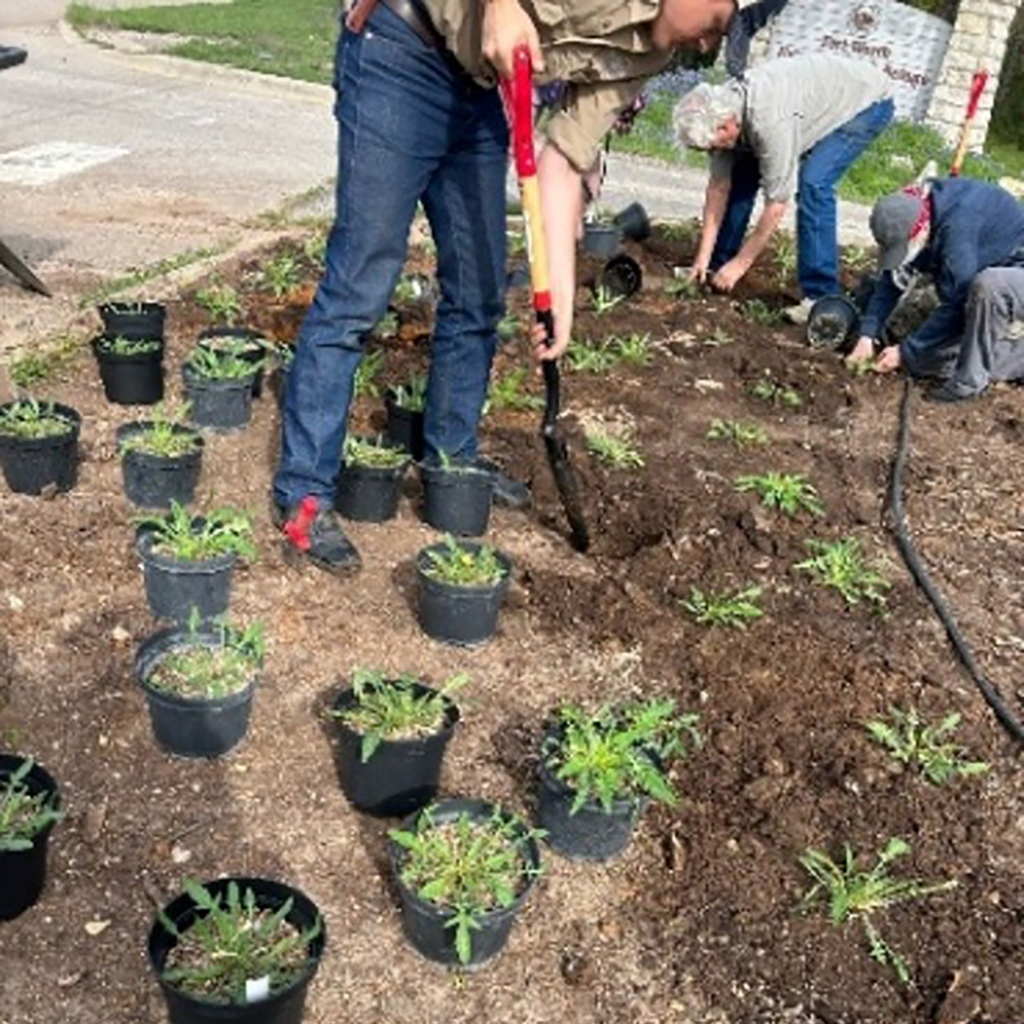
As seedlings mature, volunteers repot them into small individual containers to give them space to grow. Once established, these plants are outplanted into restoration areas where they naturally occur in the wild. These hands-on activities are essential to maintaining healthy plants and supporting successful restoration efforts.

All plants grown in the greenhouse serve a purpose. We grow a wide variety of species, from familiar plants like Texas bluebonnet (Lupinus texensis) to more challenging species such as zizotes milkweed (Asclepias oenotheroides), as well as trees like bur oak (Quercus macrocarpa). These plants support ongoing restoration projects across the Refuge by diversifying natural areas and reestablishing species in their native habitats.
Nature Hikes
With 22 miles of maintained trails, volunteers also have opportunities to participate in nature hikes. These hikes allow volunteers to explore local ecosystems, practice plant identification, and enjoy time outdoors while connecting with others. Trails pass through a variety of habitats, including sandy oak savannas, rocky Fort Worth prairies, seasonally wet bottomland hardwood floodplains, and a lotus marsh.
Seed Collecting
During the cooler months, volunteers assist with collecting and cleaning seeds to support future growing seasons. Excess seeds not used for propagation within a few years of collection are incorporated into seed mixes for restoration projects throughout the Refuge. This work helps ensure a diverse seed source for large-scale restoration efforts while providing volunteers with hands-on experience in native plant conservation and long-term land stewardship.
Whether you or your group volunteer once or regularly, your time makes a real difference. No prior experience is required, just curiosity, enthusiasm, and a willingness to learn! For questions about the native greenhouse program, contact Megan Halvorson at NatureCenter@fortworthtexas.gov.
To see all of our volunteer opportunities at the Nature Center, visit fwnaturecenter.org/volunteer-new/
To sign up to be a volunteer, fill out the required paperwork at Fort Worth Nature Center & Refuge | City of Fort Worth Volunteer Programs