
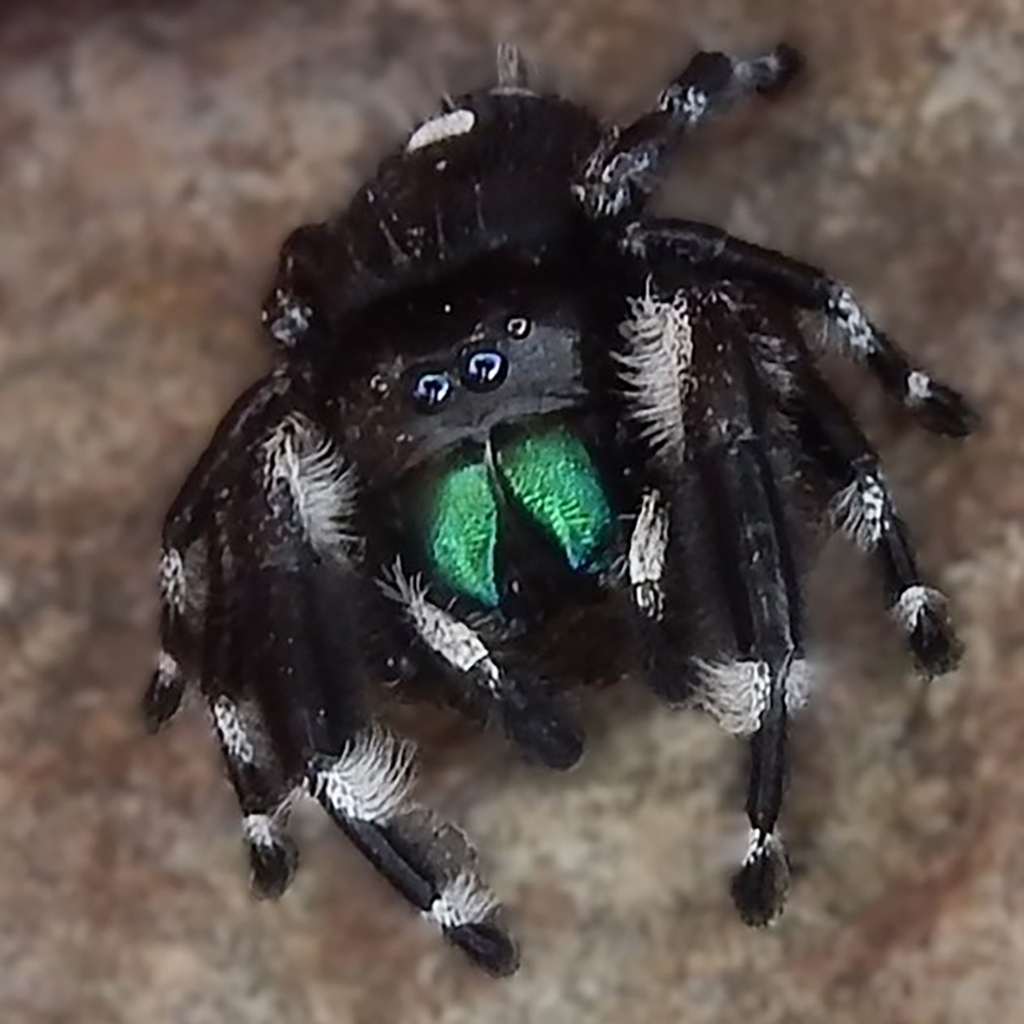
As June brings the vibrant energy of summer to the Fort Worth Nature Center & Refuge, the deer browse, the greenery flourishes, and down among the grass stems and trails, tiny predators are in peak form. Jumping spiders — family Salticidae — are among the most fascinating arachnids you can find here.
These small, fuzzy, stout spiders, often no larger than your pinky fingernail, can be seen hunting for their next meal. Unlike web-spinning spiders, jumping spiders boldly stalk their prey, leaping several times their body length to catch a fly or gnat. They are covered with sensory setae that help them detect vibrations — such as insect wingbeats and nearby threats — and aid camouflage in their environment. Their vision is remarkable: those large forward-facing eyes give them nearly 360-degree sight and enable them to judge distances precisely.
On the Nature Center’s iNaturalist observation site, the community has recorded more than 20 species at the Refuge. The most frequently seen are the Bold Jumping Spider, Phidippus audax, recognized by its colorful, metallic chelicerae (jaws), and the Tan Jumping Spider, Platycryptus undatus, which camouflages itself against tree bark. In the summer, these spiders opportunistically feed on the abundant insects buzzing around prairie grasses and woodland edges. Late in fall, many adult spiders retreat into silk “sleeping bags,” which are protective silk structures found under bark, rocks, or leaf litter. Others, having lived their full season, leave behind egg sacs that will overwinter safely until spring.
What makes jumping spiders especially engaging is their curiosity. Unlike most spiders, they don’t immediately flee. Instead, they may stop and look back at you, tilting their fuzzy heads as they sun themselves in the warm summer light. On the next visit to the park, take a moment to look for one of the tiniest acrobats near your feet. An inquisitive jumping spider could be observing you, waiting for its iNaturalist photo to be taken, while exploring its domain with each daring leap.