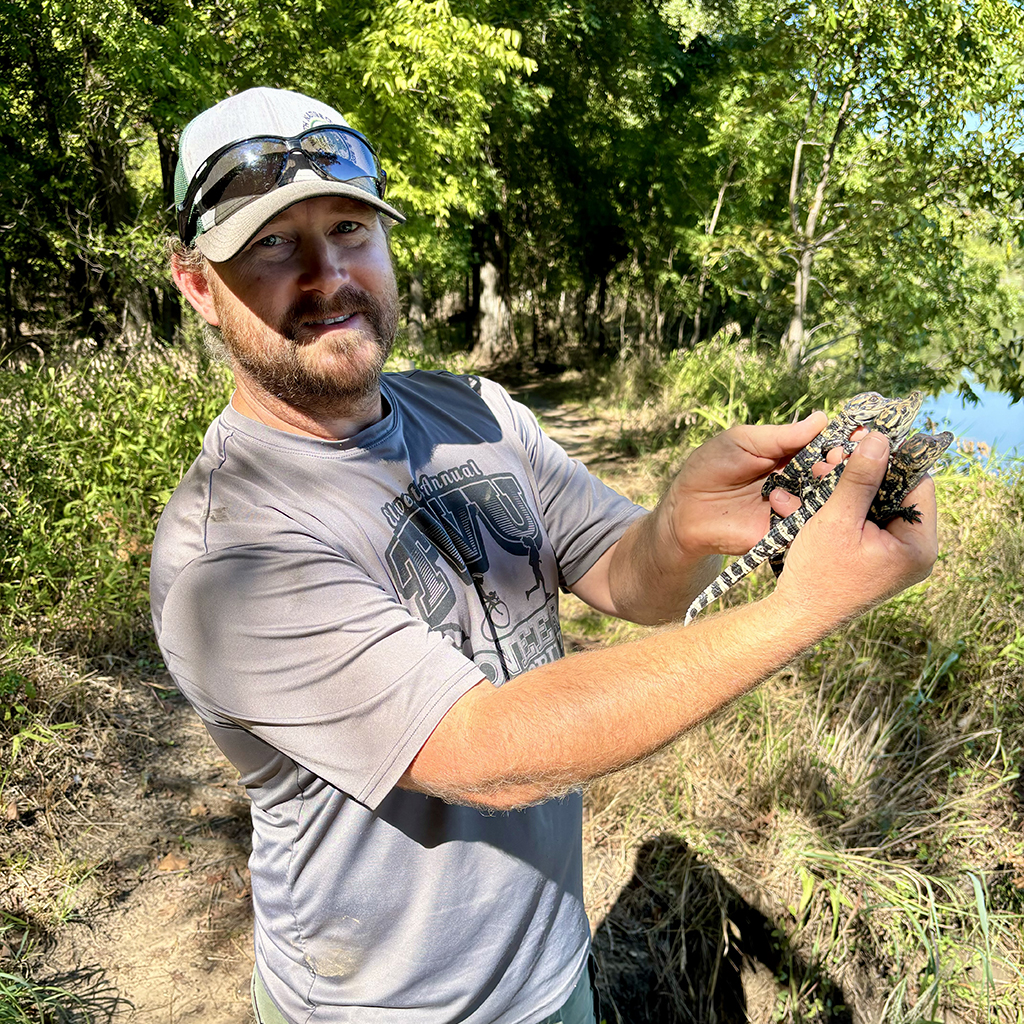
The Fort Worth Nature Center & Refuge is home to a population of American alligators, which reside here on the western edge of their range. As a keystone species, alligators play a critical role in maintaining wetland health, regulating prey populations, creating habitats for other species, and signaling the ecosystem’s overall health. Healthy wetlands, in turn, provide essential services to people, from water filtration and flood control to carbon storage.
Over the past several years, our Refuge team has been working diligently to collect data and fill knowledge gaps about the local alligator population. Our ongoing research, supported by the Friends of the Fort Worth Nature Center & Refuge, is helping us better understand the ecology, behavior, and conservation status of alligators in North Central Texas, knowledge that supports both wildlife management and public safety.
Population Surveys
Spring is an ideal time for nocturnal spotlight surveys. Alligators are becoming more active, and dense aquatic vegetation, such as American lotus, has not yet become fully established. With fewer plants blocking visibility, staff and volunteers can more easily detect alligators at night by looking for the yellowish-orange reflection of their eyes in the spotlight.
Surveys are conducted in different ways depending on the habitat. Open-water areas are surveyed by boat, shallow-water areas are surveyed by canoe or kayak, and backwater areas are surveyed on foot. It typically takes the team about three nights to complete the surveys, working from approximately 9 p.m. to midnight each night.
Our team conducts annual spotlight surveys across the Refuge and nearby water bodies, such as Lake Worth and Eagle Mountain Lake, to obtain a rough estimate of alligator presence and activity. While these surveys do not provide an exact population count, using a consistent approach each year helps us track long-term trends and better understand whether the population appears to be growing, stable, or declining.
Mark-Recapture Study
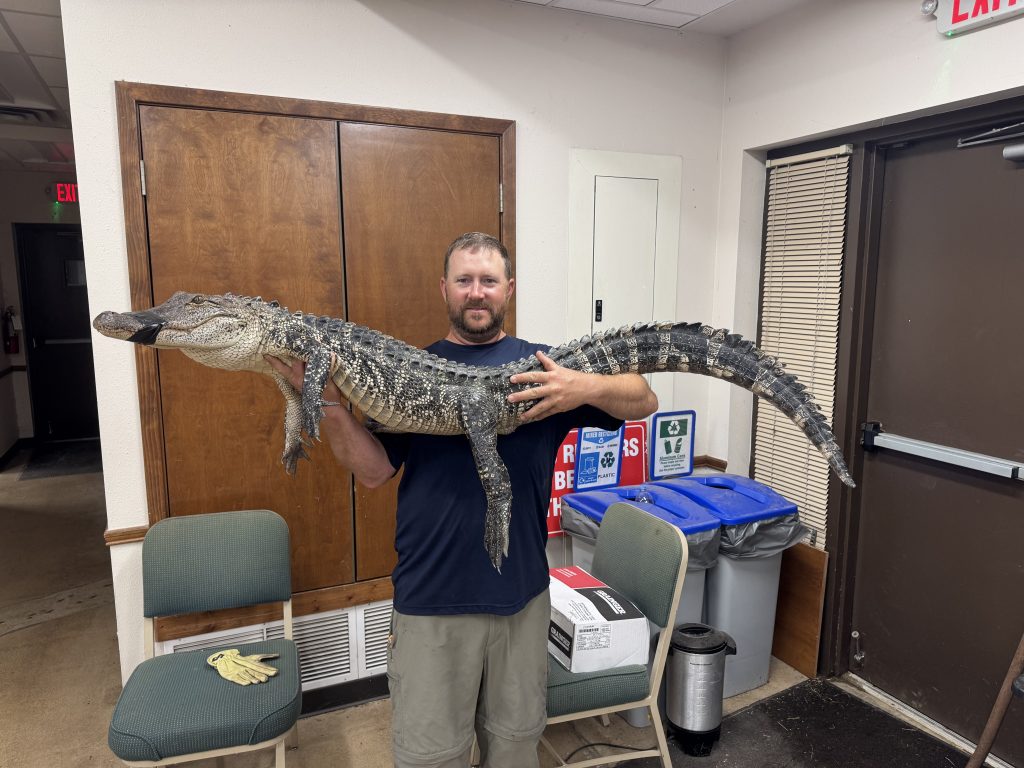
Capture-mark-recapture is a wildlife monitoring method that helps researchers estimate population size and track individual animals over time. Alligators are safely captured, measured, marked with a unique identifier, and released back into the same area. If that same alligator is encountered again during a future survey, the team can compare new measurements to previous records. The ratio of recaptured, marked alligators to newly captured, unmarked alligators helps indicate how many individuals in the population have already been sampled versus how many remain unsampled. Over time, that ratio can help estimate overall population size.
During this year’s mark-recapture study, the crew captured 15 alligators and collected morphological data, such as length, weight, sex, and general body condition. While measuring and weighing alligators isn’t always easy, it is one of the crew’s favorite monitoring activities. This method provides the most precise way to collect detailed information on individual alligators, but it also requires the most time, specialized equipment, and staff effort.
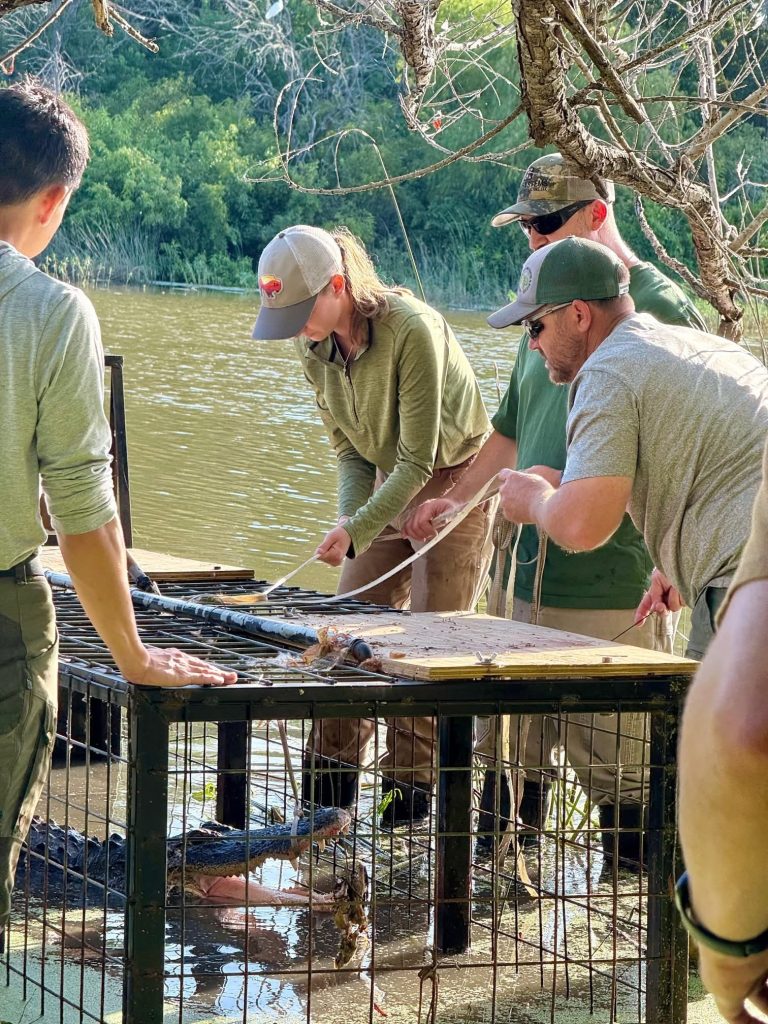
To improve long-term identification, we use tag redundancy, meaning each alligator may receive more than one type of marker. T-bar tags are small plastic tags coated with colored wax and inserted just under the scales behind the head. These tags are inexpensive and can often be observed with binoculars when an alligator’s head is above water, but they typically last only about five years. Large adults may also receive cattle tags attached to the scutes, which can also be seen with binoculars. These tags last longer, but they are too large for smaller alligators.
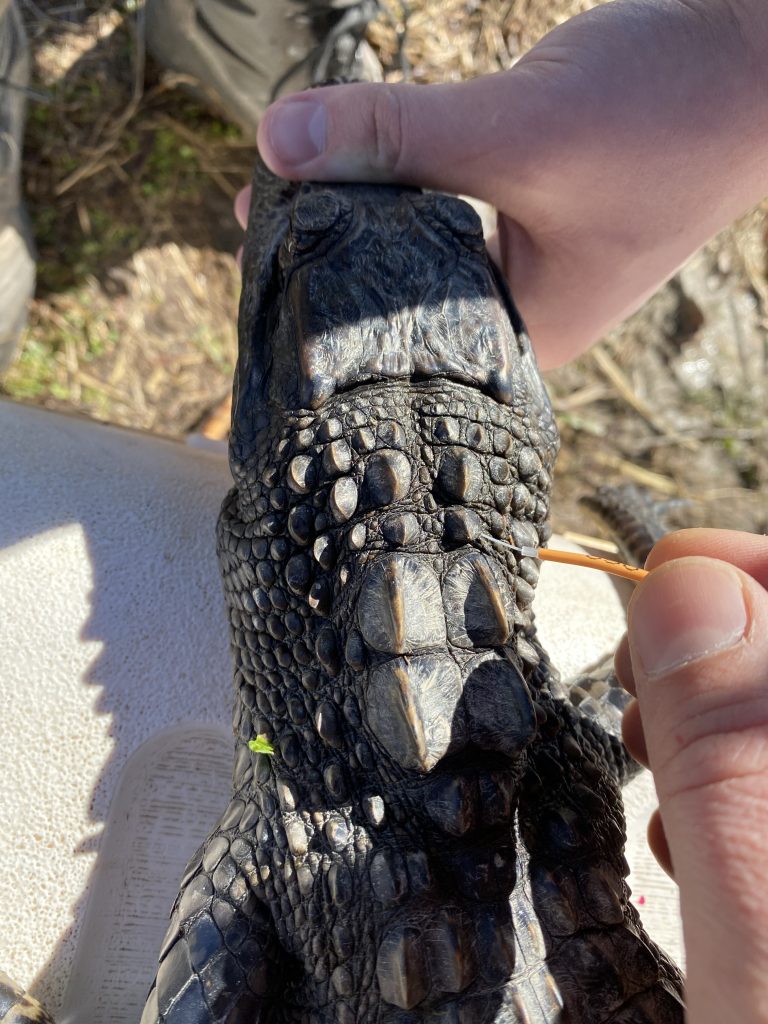
All alligators receive PIT tags, which are microchips with unique identifiers. These tags are permanent and allow the team to accurately identify individuals if they are recaptured, even many years later. In other alligator populations, PIT tags have allowed researchers to detect recaptures more than a decade later, providing valuable long-term growth and survival data.
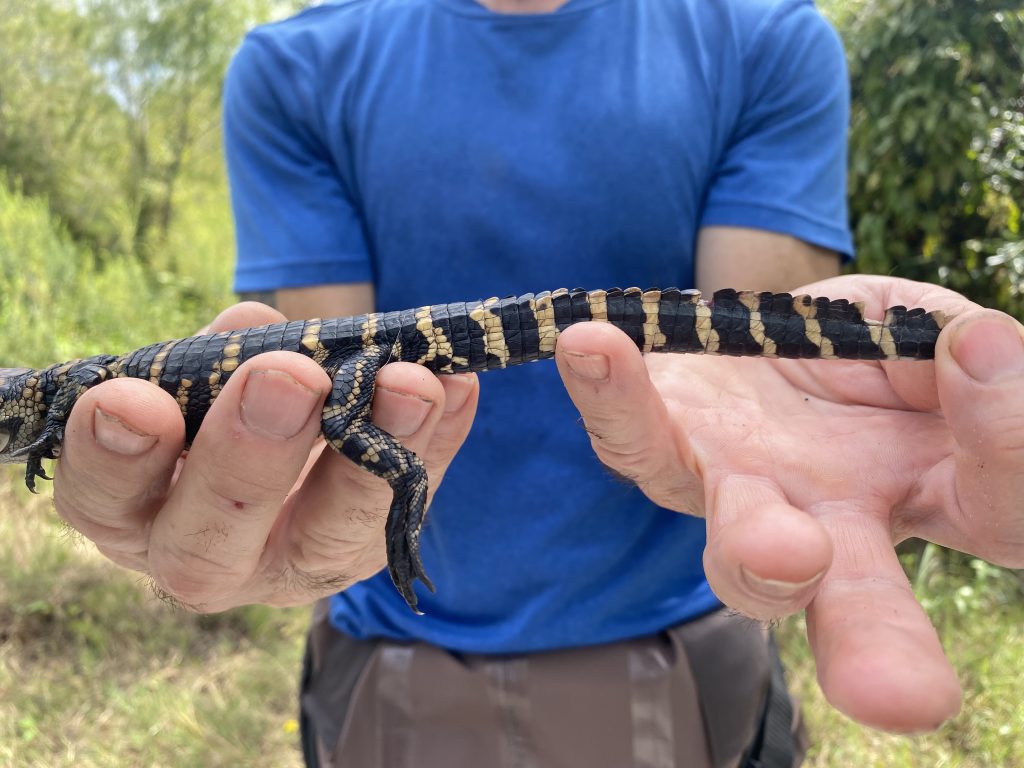
The team also uses coded scute cuts on the tail. Because scutes are made of keratin, the animal is not harmed, and the cut provides a visible, permanent backup marker while also supplying a tissue sample. Tissue samples can be used for DNA analysis, helping us understand genetic diversity, potential signs of inbreeding, and connectivity to other alligator populations. They can also support isotope analysis, which provides insight into diet, and mercury analysis, which can serve as an indicator of wetland health.
In the future, if funding becomes available, the team hopes to add GPS transmitters to track alligator movements and better understand how individuals use the Refuge and surrounding waterways.
Together, spotlight surveys and mark-recapture work give us a more complete picture of the alligator population and help guide long-term monitoring and management decisions.
Nest Monitoring
Nest surveys are another important method of understanding the alligator population. Each summer, the team surveys potential nesting areas by hiking and boating through suitable habitat to look for the dome-shaped nests built by female alligators. These surveys help us document nesting locations, estimate natality rates, and better understand whether successful reproduction is leading to recruitment into the population.
Understanding nesting success and hatchling recruitment gives us a more complete picture of the population than adult counts alone. A population may appear stable based on spotlight surveys or mark-recapture data, but without understanding how many young are being produced and surviving, we may miss important trends in long-term population health.
Last season, we documented eight nests. Three successfully produced hatchlings in September, while the others were lost to raccoon predation. Raccoons are major nest predators and serve as a natural control on alligator populations. Even when nests succeed, hatchling survival is extremely low due to predation from birds, otters, larger alligators, and fish. Survival can be especially challenging if the mother lacks access to a den with an air pocket that helps young alligators endure their first winter.
In an important collaboration, we are currently partnering with the University of North Texas to expand this work through drone surveys for nests and DNA analysis from eggshells. Drone surveys may help identify nests in difficult-to-access areas, while DNA extracted from eggshells can provide insight into genetic diversity among hatchlings and help us better understand the reproductive health of the population.
Nesting data also helps us better understand habitat needs and balance conservation with public safety. Female alligators may actively protect nests and hatchlings, so knowing where nesting occurs can help staff make informed decisions about monitoring, public access, signage, and visitor safety during sensitive times of year.